May 9, 2022
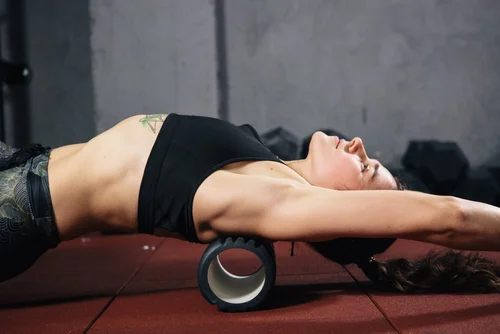
Many people suffer from neck or shoulder pain, especially as a result of our modern digitized society. A high prevalence of the dreaded ‘tech neck,’ increased chronic stress, poor health habits, and other conditions can contribute to these upper body pains. If left unmanaged, neck and shoulder problems can turn into repetitive use injuries – not so fun .
Every functional movement program, whether for better athletic performance, general health, or physical therapy, should incorporate three types of fitness training: cardio, resistance, and flexibility. When done correctly, these exercises can dramatically help prevent and manage back pain.
In particular, Stretching can improve joint flexibility and reduce pain. As our understanding of flexibility, or mobility, training has advanced, the concept has shifted to a more holistic model that focuses on relaxing and releasing fascia. In this post, our M.A.T. expert, Maurice Harden , explains how self-myofascial release techniques can help you relieve a stiff neck and shoulders.

Pronounced fah-sha, fascia is essentially the connective tissue that holds all the bones, muscles, organs, bells, and whistles together in your body. For a long time, fascia was thought to be passive tissue. However, while still tricky to define, it is seen to play a much more significant role.
Taking many forms, both stretchy and stiff, fascia is the bands made mostly of collagen found throughout your entire body.
Since fascia connects your entire body together, something off in one part of the body can have a cascading impact on your overall health. Unhealthy fascia can cause restrictions and adhesions such as muscle knots in the body. This may be caused by:
Benefits of Healthy Fascia
Poor fascia health can cause many issues within the body, but fortunately, there are many things you can do to improve your fascia mobility and health. The benefits of healthy fascia include:
One way to improve mobility of the joints is to stretch. However, you can also improve mobility within your body by releasing wound-up fascia that acts as a net covering all of the structures in your body. While we know it’s not quite the same as receiving a deep-tissue massage, there are several ‘exercises’ you can do for self-myofascial release.
If you feel like your shoulders aren’t sitting quite right, almost like they’re slightly out of place, or your neck is rigid, you may feel much better after targeting the upper body with myofascial release. There are countless tools available for myofascial work, but all you really need is a foam roller and a tennis ball. Now let’s get to the techniques.
Rhomboids
Between your spine and your shoulder blades are the rhomboid muscles. These may feel particularly tense after a long day hunched over the computer. They may get tight because they are weak, but they also may feel sore as the result of muscle imbalances in the shoulders, neck, arms, or head. Or there may be a combination of factors.
Tight rhomboid muscles will cause them to not sit quite right on your back, which can ultimately lead to reduced shoulder mobility and eventual degeneration.
With either a tennis ball or a foam roller, lie down on the floor. If using a foam roller, place it lengthwise beneath your spine. Cross your arms with your hands touching the opposite shoulder, but don’t overdo it. Hold this position for a few minutes and then relax. After easing into it, you can work on rolling side to side to hit different parts of the muscle.
For more pinpointed release, use a tennis ball beneath your shoulder. You can even have a partner roll it on your shoulders and upper back.
Sub-Occipital
If you’re dealing with “tech neck,” your head is positioned slightly forward. This can lead to rounding of the upper back and a lot of pain. Follow these steps to release the sub-occipital muscles.
Keep in mind that these techniques will likely cause slight discomfort if your fascia is tight and rigid. However, listen to your body. If you feel any severe pain, stop the technique and speak with your health care providers at Dynamic Fitness & Rehabilitation .
Thoracic Spine
The thoracic spine towards the middle of your back connects to your ribs. This part of your back provides a lot of support for the neck, shoulders, and head. Take advantage of the thoracic spine to reduce pain in other parts of the body.
With a foam roller perpendicular to your body at the bottom of your shoulder blades and your knees bent with your feet flat on the floor, relax into this position.
While self-myofascial release is a fantastic tool for many people, it’s not for everyone. If you recently were Injury or deal with a chronic pain condition like fibromyalgia, then this kind of body work may not be the best option for you.
To know for sure, see your doctor or visit our providers at Dynamic Fitness & Rehabilitation Center.
At Dynamic Fitness & Rehabilitation , we truly believe in the power of movement to heal. Whether you are struggling with back, neck, shoulder, or any other pain, our team of experts is here to help. We want to see you thriving and moving with the freedom you deserve.
If you are ready to release pain and stress with movement, call Dynamic Fitness & Rehabilitation - (813) 422-5671 .